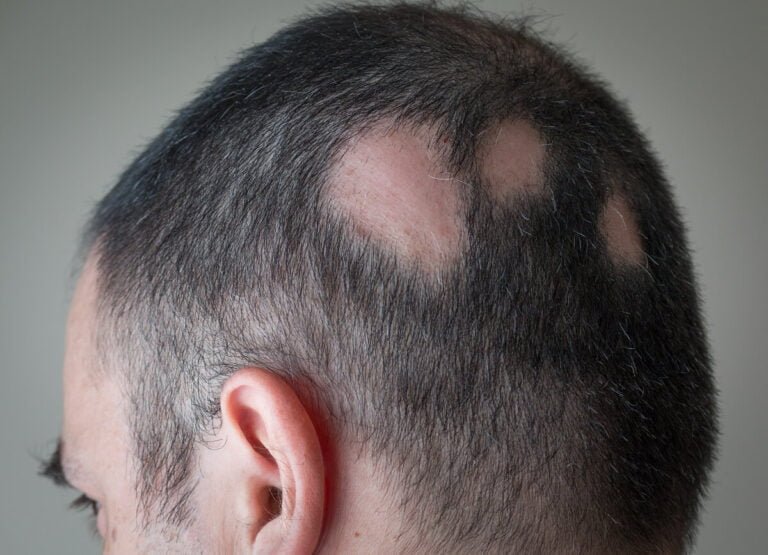
Around the world, millions of people experience hair loss from one day to the next. While some hair loss is closely linked to autoimmune diseases such as alopecia, others are caused by certain medications.
Few people are aware that there are drugs that cause hair loss, and that they should be avoided or not abused. This article not only gives you the facts, but also suggests a solution for correcting your baldness.
Top 4 medications that cause hair loss
Many people live with the constant stress of hair loss. This situation obviously has repercussions on the physical appearance and image of the person experiencing it.
For some, hair loss occurs naturally due to a deficiency in the immune system. But for others, it occurs after taking medications that cause hair loss.
Anti-cancer treatments
Most anti-cancer treatments lead to hair loss. This is because hair follicle cells have the capacity to multiply as rapidly as cancer cells.
The drugs used in chemotherapy, particularly antineoplastics, are designed to destroy any cells that multiply at a high rate.
As a result, most people undergoing chemotherapy suffer from alopecia; that is, they lose their hair, often in the anagen phase, between 7 and 10 days after the start of their treatment.
Normally, these hair-loss drugs should not cause irreversible baldness in these patients. But many of them suffer from it all the same.
Non-steroidal anti-inflammatory drugs
Most long-term treatments with non-steroidal anti-inflammatory drugs such as ibuprofen, aspirin and others can cause hair loss. These drugs can cause telogen effluvium, i.e. increased hair loss.
Anti-cholesterol drugs
There are a number of medications often prescribed to combat hypercholesterolemia or high blood pressure that can have side-effects on the scalp.
These hair-reducing drugs interfere with keratinization, destroying or weakening hair-producing cells. It is therefore advisable to consult a doctor before taking these medications (Befizal, Pravadual, Pravastatin…).
Antidepressants
Some antidepressants like zoloft can cause diffuse alopecia within 3 months of starting treatment. Generally, this loss of hair is reversible once treatment has ended. However, in the case of long-term or lifelong treatment, hair loss can lead to baldness.
Apart from these 4 types of treatment, there are also other types of medication that cause hair loss. These include
- anticoagulants,
- anti-epileptics
- lithium-based treatments,
- retinoids,
- thyroid treatments….
Read Also: Does weed cause baldness?
The Two Ways Medications Trigger Hair Loss
Not all drug-related shedding works the same way, and the type tells you how fast it shows up and how it recovers.
- Telogen effluvium is the common one. The drug pushes a large share of follicles into the resting phase, and you see diffuse thinning across the whole scalp about two to four months later. It is usually reversible once you stop the medication.
- Anagen effluvium is the dramatic one seen with chemotherapy. It attacks hairs while they are actively growing, so loss is rapid and heavy, often within days to weeks. Hair typically regrows after treatment ends.
A Fuller List of Drug Classes Linked to Hair Loss
The four covered above are the most common culprits, but several other classes can be involved:
| Drug class | Examples / used for |
|---|---|
| Blood thinners | Warfarin, heparin (anticoagulants) |
| Blood pressure / heart | Beta-blockers such as propranolol and metoprolol, ACE inhibitors |
| Retinoids | Isotretinoin and other high-dose vitamin A derivatives for acne |
| Anticonvulsants | Valproic acid, used for epilepsy and mood |
| Hormonal treatments | Some birth control pills, hormone therapy, anabolic steroids |
| Thyroid medication | When the dose is not yet balanced |
| Gout medication | Allopurinol |
| Immunosuppressants | Certain drugs used after transplants or for autoimmune disease |
Dose matters a lot here. Many people take these drugs with no hair changes at all, and the higher the dose, the higher the risk.
Will My Hair Grow Back After Stopping the Medication?
In most cases, yes. Telogen effluvium from medication is usually temporary, and hair density tends to return within three to six months after the drug is stopped or the dose is lowered. Chemotherapy hair almost always grows back, sometimes with a change in texture or color at first. The exception is when a medication unmasks or speeds up underlying pattern baldness, which may not fully reverse on its own.
What to Do If You Suspect Your Medication
- Do not stop a prescribed drug on your own. Stopping some medications suddenly is more dangerous than the hair loss.
- Note when the shedding started and compare it to when you began the drug. The two to four month gap is a useful clue.
- Talk to your doctor. There is often an alternative drug, a lower dose, or simply reassurance that the loss is temporary.
- Support regrowth with good nutrition, gentle hair care, and patience while the cycle resets.
Frequently Asked Questions
How long after starting a medication does hair loss begin?
For telogen effluvium, usually two to four months. For chemotherapy, within days to a few weeks.
Can vitamins or supplements cause hair loss too?
Yes. Too much vitamin A or selenium can trigger shedding, so more is not always better.
Is medication hair loss permanent?
Usually not. It tends to reverse once the drug is stopped, unless it accelerated existing pattern baldness.
How can you prevent hair loss caused by drug treatments?
Most cases of medicated hair loss are reversible at the end of treatment. But for those that prove irreversible, there’s no better way than to opt for a hair transplant.