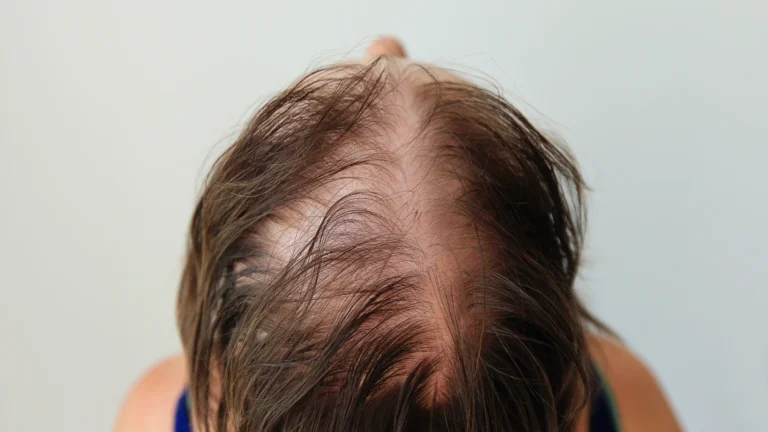
San Diego, CA – Biotechnology company Inmagene today announced an important milestone in the development of a potential new treatment for alopecia areata, an autoimmune disorder that causes hair loss.
The company has dosed the first patient in a Phase 2a clinical trial evaluating IMG-007, an anti-OX40 monoclonal antibody engineered to have an extended half-life.
Alopecia areata affects over 6 million people in the United States alone, causing patchy or complete hair loss that can be psychologically devastating.
There are currently no FDA-approved treatments for this condition. Inmagene aims to change that with IMG-007.
IMG-007 targets OX40, a co-stimulatory receptor expressed on immune cells. By binding to OX40, the drug candidate suppresses the aberrant immune response that attacks hair follicles in alopecia areata.
The extended half-life technology applied to IMG-007 was designed to allow less frequent dosing while maintaining therapeutic drug levels.
The Phase 2a trial has commenced dosing and will evaluate the safety, pharmacokinetics, and efficacy of IMG-007 in patients with moderate to severe alopecia areata. The primary outcome measures include hair regrowth, hair coverage, and level of immune response modulation.
“We are encouraged by the promising preclinical and Phase 1 data for IMG-007 and are excited to advance this potential first-in-class OX40 antagonist into Phase 2 evaluation,” said Yufang Lu, Chief Medical Officer at Inmagene. “We hope this trial marks a significant step towards providing an effective and safe therapy for patients with alopecia areata.”
If the results from the Phase 2a trial are favorable, Inmagene plans to initiate a larger Phase 2b trial and eventually seek regulatory approval for IMG-007.
While it is still early in the trial process, the potential breakthrough offered by this novel monoclonal antibody raises hopes that a more effective and lasting treatment for alopecia may be on the horizon.
For millions coping with alopecia areata worldwide, IMG-007 represents a hopeful new treatment on the horizon – one that may finally provide a durable solution to hair loss.
Source:
- Inmagene Doses First Patient in Phase 2a Trial of IMG-007, an Anti-OX40 Monoclonal Antibody with an Extended Half-life, for the Treatment of Alopecia Areata: https://www.biospace.com/article/releases/inmagene-doses-first-patient-in-phase-2a-trial-of-img-007-an-anti-ox40-monoclonal-antibody-with-an-extended-half-life-for-the-treatment-of-alopecia-areata/
- Inmagene Doses First Patient in Phase 2a Trial of IMG-007, an Anti-OX40 Monoclonal Antibody with an Extended Half-life, for the Treatment of Alopecia Areata: https://www.prnewswire.com/news-releases/inmagene-doses-first-patient-in-phase-2a-trial-of-img-007-an-anti-ox40-monoclonal-antibody-with-an-extended-half-life-for-the-treatment-of-alopecia-areata-301956087.html
- First Patient Dosed in Phase 2a Trial of IMG-007 for Alopecia Areata: https://www.dermatologytimes.com/view/first-patient-dosed-in-phase-2a-trial-of-img-007-for-alopecia-areata
- Inmagene announces first subject dosing in alopecia areata trial: https://www.clinicaltrialsarena.com/news/inmagene-subject-dosing-alopecia-areata-trial/
- Inmagene Doses First Patient in Phase 2a Trial of IMG-007, an Anti-OX40 Monoclonal Antibody with an Extended Half-life, for the Treatment of Alopecia Areata: https://www.panaceaventure.com/news/inmagene-doses-first-patient-in-phase-2a-trial-of-img-007-an-anti-ox40-monoclonal-antibody-with-an-extended-half-life-for-the-treatment-of-alopecia-areata
- Inmagene Biopharmaceuticals: https://www.linkedin.com/posts/inmagene-biopharmaceuticals_today-inmagene-announced-that-it-dosed-first-activity-7118625632573378562-9nRA
How Monoclonal Antibody Treatments Work
A monoclonal antibody is a lab-made protein designed to lock onto one specific target in the body. In autoimmune conditions like alopecia areata, that target is usually a signal the immune system uses to coordinate its attack on hair follicles. By blocking that single messenger, the antibody aims to switch off the attack while leaving the rest of the immune system working. That precision is the appeal, and it is a different approach from broad immune suppressants that carry wider side effects.
Could It Really “End” Alopecia?
The honest answer is that no treatment yet cures the underlying tendency. What these therapies can do is calm the immune attack so hair regrows, sometimes dramatically. The hair often stays only while treatment continues, and may shed again if the drug stops. So “ending it for good” is optimistic. A more realistic goal is long-term control, the way other autoimmune conditions are managed.
What to Watch Next
Three things decide whether a candidate like this reaches patients: how well it regrows hair in larger trials, how safe it is over months and years of use, and whether regulators approve it. Each stage takes time. If you are following alopecia research, the milestones to look for are Phase 3 results and regulatory submissions.
Frequently Asked Questions
Is a monoclonal antibody safe?
This class is widely used in other conditions and is generally well tolerated, but each new drug has its own safety profile that trials are designed to establish.
How is it given?
Antibody treatments are usually delivered by injection or infusion rather than a daily pill.
Will it work for male pattern baldness?
No. It targets the immune cause of alopecia areata, not the hormonal cause of pattern baldness.